 then 'Add to home screen'
 then 'Add to home screen'



What it takes Saudi Manufacturers to Stay Compliant with SIRI (Future Factories) and Vision 2030?
Saudi Arabia’s manufacturing sector is moving fast—like “we’re late for a meeting in Riyadh traffic” fast. Under Vision 2030, factories are upgrading from paper-driven operations and scattered Excel files to connected, data-driven, automated “advanced plants.” One of the biggest national accelerators of this shift is the Factories of the Future (Future Factories) Program on Industry.sa, which aims to support 4,000 factories in adopting global best practices, reducing costs, and improving operational efficiency and competitiveness.

But here’s the reality: most manufacturers don’t fail because they “don’t want Industry 4.0.” They fail because compliance and operational control are hard when processes are fragmented. And that’s exactly where a manufacturing-first ERP becomes a competitive weapon.
This article explains—step-by-step and in manufacturing language—how Alwajeez Tech’s ALZERP helps factories in Saudi Arabia stay compliant, build audit-ready operations, and align with SIRI-based transformation under the Factories of the Future Program—while still keeping production moving.
Why compliance is now a factory KPI (not just an accounting problem)
In 2026, “compliance” in Saudi manufacturing is not one checklist. It’s a system of systems:
- Tax and e-invoicing requirements (especially ZATCA e-invoicing integration phase)
- Traceability (lots, batches, serials, recalls)
- Inventory integrity (shrinkage, adjustments, approvals)
- Production control (BOM accuracy, consumption, yield, scrap reasons)
- Auditability (who did what, when, and why)
- Digital maturity targets to qualify for transformation incentives and recognition
The Factories of the Future Program lays out a clear journey: apply + self-evaluation → audited evaluation and transformation plan → implement with approved service providers → become classified as an advanced plant if targets are exceeded.
It also mentions support through grants and financing during implementation.
So compliance is no longer “back-office.” It’s now directly tied to transformation progress.
Future Factories Program + SIRI: where ERP fits (without pretending it’s the whole story)
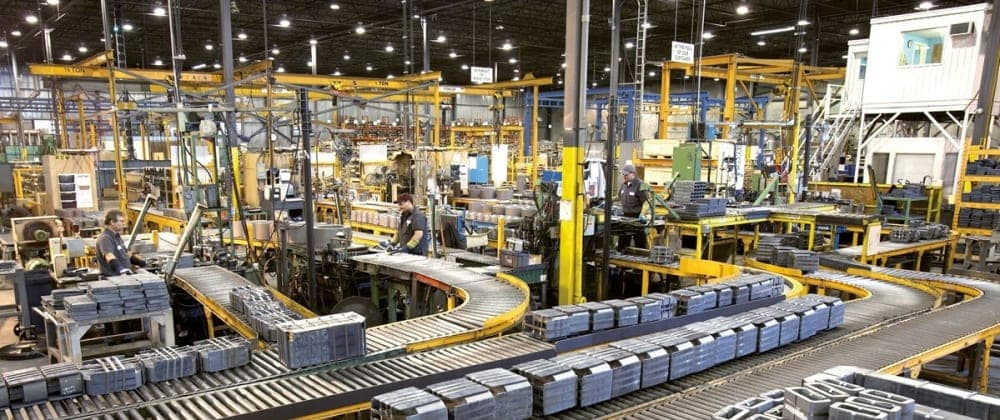
The Factories of the Future Program is explicitly positioned as a path to adopt Fourth Industrial Revolution technologies and improve productivity.
It includes steps where factories contract with accredited evaluators, then implement transformation solutions by contracting with approved service providers—and can benefit from grants/financing initiatives.
The methodology behind the program: SIRI
A lot of factories hear “SIRI” and imagine it’s a robot assistant on an iPhone. But in manufacturing, SIRI = Smart Industry Readiness Index, an Industry 4.0 maturity framework used to assess a factory’s readiness and guide roadmaps.
SIRI’s official framework evaluates a facility across:
- 3 building blocks: Process, Technology, Organization
- 8 pillars
- 16 dimensions, each scored across maturity bands
This matters because ERP isn’t “just software.” In a SIRI transformation roadmap, ERP contributes heavily to dimensions related to integration, operations control, data, and organization alignment—because it connects planning, execution, and compliance in one operational nervous system.
The grant reality: why “ERP-ready” projects get approved faster
On Industry.sa’s official service pages for Fourth Industrial Revolution grants, the grant is described as supporting basic digitization and automation solutions, including process digitization, planning systems, communications networks, production line control, material handling, and packaging—with coverage up to 80% of project cost, capped at 300,000 SAR.

Translation: if your ERP project is positioned as “we’ll install an ERP,” it sounds vague.
If it’s positioned as:
- process digitization,
- planning systems (MRP/production scheduling),
- shopfloor/warehouse control (barcode, traceability),
- integrations and audit controls,
…then it maps cleanly to what the grant language describes.
And the Factories of the Future Program itself highlights a grant mechanism for basic digitization (80% up to 300k) plus broader financing options.
The compliance stack in Saudi manufacturing (and how ALZERP turns it into a workflow)

Let’s break down the compliance stack into what factories actually do each day, and how ALZERP support it.
1) ZATCA e-invoicing (Integration Phase): compliance needs system-level controls
ZATCA’s e-invoicing Phase Two (Integration Phase) requires additional requirements compared to Phase One, including integrating the taxpayer’s e-invoicing solution with ZATCA’s Fatoora platform, issuing e-invoices in a specific format, and including additional fields. ZATCA also rolls this out in waves and notifies each wave at least six months before the integration date.
What this means for factories:
- Invoices can’t be “manually fixed later.”
- The ERP must enforce required fields and data integrity at the source.
- Credit notes, returns, and partial deliveries need consistent references.
- Audit logs and controlled access become essential.
How Alwajeez Tech ERP helps (practical design):
- Invoice data validation rules (no missing VAT fields, customer VAT ID where required, correct item tax codes)
- Tamper-evident workflows (approved corrections via credit/debit notes, not silent edits)
- Integration-ready architecture (API connectors and message queue design so ZATCA integration doesn’t break production billing)
- Centralized invoice archiving + audit trail for compliance reviews
Important honesty note: whether a specific ERP is “ZATCA approved” depends on the official qualification process; what you can do as a vendor is build your system to meet the published integration requirements and support client qualification.
2) Traceability and quality: lot, batch, serial = your factory’s “memory”
Saudi manufacturers—especially food, chemicals, pharma-adjacent, plastics, and industrial materials—need increasing control over:
- raw material lots,
- work-in-process traceability,
- finished goods traceability,
- recalls, returns, nonconformance.
SIRI maturity dimensions emphasize integration and operational control across process/technology/organization.
Traceability is a classic “quick win” that boosts both compliance confidence and production decision-making.
Alwajeez Tech ERP approach:
- Lot/batch on receiving → carried through consumption → tied to work orders → tied to shipments
- Quality checkpoints: incoming inspection, in-process checks, final QC
- Nonconformance workflow: defect type, containment, corrective action, approvals
- “One click” trace report: from customer shipment → back to raw lots and operators
3) Inventory integrity: compliance starts in the warehouse, not in finance
You can’t be “financially compliant” if your inventory is imaginary. In manufacturing, inventory isn’t just “how many boxes.” It’s:
- location control,
- controlled adjustments,
- cycle counts,
- scrap and rework,
- WIP valuation logic,
- approvals.
ERP controls that matter:
- Role-based permissions (who can adjust stock?)
- Mandatory reasons + supporting documents for adjustments
- Segregated duties (maker-checker approvals)
- Real-time stock by location, lot, and status (available / quarantined / scrap)
This doesn’t just reduce loss—it also makes audits less painful.
Mapping Alwajeez Tech ERP to SIRI: the “factory-friendly” view
SIRI assesses 16 dimensions across Process, Technology, and Organization.
Here’s how an ERP implementation typically supports a SIRI-aligned roadmap.
A) Process building block: operational discipline
What evaluators look for:
- standardized workflows
- process visibility
- consistent execution across shifts and lines
ERP features that help:
- standardized BOM/routing version control
- work order lifecycle + approvals
- CAPA workflow for quality issues
- maintenance requests + downtime reasons tied to assets
B) Technology building block: connectivity and data
SIRI’s assessment matrix and methodology emphasize evaluating maturity across technology pillars like connectivity and intelligence.
ERP features that help:
- barcode scanning (warehouse + production issue/return)
- integrations with weighing scales, label printing, QC devices
- API-first design for future MES/SCADA/IoT integration
C) Organization building block: people, governance, competency
Factories don’t transform because they bought software. They transform because:
- leadership owns the KPIs,
- roles are clear,
- approvals and responsibilities are enforced.
ERP features that help:
- role-based access control
- change logs and audit trails
- workflow-based approvals
- training + “guided screens” by role (storekeeper ≠ production planner ≠ accountant)
Implementation guidance under Future Factories: a practical playbook manufacturers actually follow
The official program journey is clear: self-evaluation → audited evaluation & transformation plan → implement using approved service providers and benefit from incentives.
Here’s how Alwajeez Tech typically structures an ERP implementation so it aligns with that journey and stays grant-friendly.
Phase 1: Pre-assessment readiness pack (2–4 weeks)
Goal: help the factory show clarity during the audited evaluation.
Deliverables:
- Current process map (procure-to-pay, plan-to-produce, order-to-cash)
- Data inventory (items, BOMs, routings, suppliers, customers)
- Compliance risk scan (e-invoicing readiness, audit trail gaps, traceability gaps)
- KPI baseline (OEE inputs, downtime reasons, scrap %, inventory accuracy)
Phase 2: Transformation roadmap + scope (2–3 weeks)
This is where you map ERP scope to:
- the factory’s highest pain points,
- the SIRI roadmap priorities,
- what can be executed within grant timelines.
Deliverables:
- module scope (manufacturing, inventory, finance, procurement, quality, maintenance)
- integration scope (ZATCA connector readiness, barcode devices, label printing)
- rollout plan by site/line/warehouse
- success metrics
Phase 3: Implementation + control design (8–16 weeks typical)
Deliverables:
- configured workflows + approvals
- master data governance rules
- traceability setup (lot/batch)
- user roles and audit trails
- dashboards for production/warehouse/finance
Phase 4: Go-live + stabilization (4–8 weeks)
Deliverables:
- hypercare support
- daily KPI review
- issue log + fixes
- compliance validation checks (invoice fields, approval logs, trace reports)
Phase 5: Optimization + Industry 4.0 expansion (ongoing)
Once ERP stabilizes, you can layer:
- machine integration,
- advanced planning,
- predictive maintenance,
- AI-driven anomaly detection.
This step-by-step approach matches how the program expects factories to execute transformation solutions after assessment and planning.
Why this aligns with Vision 2030 (and how to say it without sounding like a brochure)
Vision 2030 is about diversification, competitiveness, productivity, and job quality. The Factories of the Future Program explicitly emphasizes improving efficiency, reducing costs, and transitioning away from labor-intensive approaches—while raising innovation and technical development.
An ERP supports Vision 2030 outcomes when it:
- reduces waste and rework through process control,
- improves productivity through planning and scheduling,
- improves data transparency for decision-making,
- creates higher-skill jobs (planning, analytics, systems operations),
- helps factories qualify for transformation incentives and recognition.
In other words: ERP is not the goal. ERP is the engine room.
Real factory outcomes: what “compliant + SIRI-aligned ERP” looks like day to day
When Alwajeez Tech ERP is implemented correctly, the factory starts to feel different:
- Every purchase receipt is tied to an approved PO, with lot/batch recorded.
- Every work order has BOM consumption recorded (including scrap reasons).
- Every finished batch has QC checkpoints and traceability reports.
- Every invoice is generated from controlled data—not manual edits.
- Every adjustment requires a reason and approval.
- Management sees dashboards based on real transactions, not “best guesses.”
That’s how compliance becomes a habit—not a panic attack before an audit.
Industries included:

- ERP for manufacturing in Saudi Arabia
- Saudi Arabia manufacturing ERP compliance
- SIRI compliance ERP
- Factories of the Future ERP implementation
- Vision 2030 smart factory ERP
- ZATCA e-invoicing ERP integration
- Industry 4.0 ERP Saudi Arabia
- Future Factories grant ERP 300,000 SAR
- Manufacturing digital transformation Saudi Arabia
FAQ
Is there an official ERP implementation guide inside the Factories of the Future Program?
The official program pages describe the transformation journey (self-evaluation → audited evaluation & plan → implementation with approved providers → classification as advanced plant). They do not provide a single public “ERP-only manual,” but ERP fits as a key digitization solution under the roadmap and implementation stage.
Does the program provide funding for ERP projects?
Industry.sa describes a grant that motivates factories to adopt basic digitization solutions by covering 80% up to 300,000 SAR, and there are also financing options mentioned.
What is SIRI and why does it matter for ERP?
SIRI (Smart Industry Readiness Index) is a manufacturing digital maturity assessment framework with 3 building blocks and 16 dimensions used to evaluate and guide Industry 4.0 transformation roadmaps.
What does ZATCA require for Phase 2 e-invoicing?
ZATCA’s Integration Phase includes integrating e-invoicing solutions with the Fatoora platform, issuing e-invoices in specific formats, and adding additional fields. Rollout happens in waves with advance notice.
If Saudi Arabia’s Factories of the Future vision is the destination, then SIRI is the map and ERP is the steering wheel. A factory can’t score higher maturity levels—or sustain compliance—if planning, inventory, production, invoicing, and traceability live in separate worlds.
Alwajeez Tech’s ALZERP is built for that reality: manufacturing workflows, audit-ready controls, and integration-first architecture—so factories can modernize confidently, stay compliant, and align with Vision 2030 transformation goals.